
Culinary Tours Worth Taking
📖 Table of Contents
- What Makes a Culinary Tour Worth Taking?
- How to Select the Right Culinary Tour for Your Event
- The Benefits of Culinary Tours for Event Hosts
- Culinary Tours for Small-Space Events
- Culinary Tours for Outdoor Events
- The Grown-Up Version of a Culinary Tour
- Culinary Tours That Are Easy to Plan
- Make It Your Way
- Frequently Asked Questions
I still remember the first time I took a culinary tour of Lisbon — the smells of saffron and olive oil wafting through the narrow streets, the rhythmic clatter of knives in a bustling market. The warmth of a local chef sharing a recipe as we stood in her kitchen. It wasn’t just about food; it was about connection, tradition, and the stories behind every dish. Culinary tours worth taking are more than just a trip to a restaurant — they're immersive experiences that bring people together, deepen cultural understanding, and create lasting memories.[4]
For event planners and party hosts, culinary tours can be a powerful tool to elevate gatherings, whether it's a small family affair or a large-scale corporate event. I’ve walked through kitchens with chefs who’ve been honing their craft for decades, and I’ve seen how those same skills can translate into unforgettable experiences for guests. When you choose culinary tours worth taking, you’re not just selecting a menu — you're choosing a story, a tradition, and a level of authenticity that can’t be replicated.
I remember one particular event where we brought in a chef from Tuscany to lead a cooking demonstration. The guests weren’t just spectators — they were participants, learning how to roll pasta by hand, taste the difference between fresh and dried basil. Understand the role of each ingredient in the final dish. That’s the magic of culinary tours worth taking: they transform passive guests into active participants, turning a simple gathering into a shared journey of discovery and flavor.
Why You'll Love This Article
- Discover how to pick authentic culinary experiences that elevate your events.
- Learn practical tips for integrating cultural elements into your next gathering.
- Find out how to create immersive experiences that go beyond the traditional party.
- Explore the benefits of hands-on, interactive culinary tours for your guests.
What Makes a Culinary Tour Worth Taking?
As of September 2026, a true culinary tour is not just about tasting food — it’s about stepping into the heart of a culture. I once took a tour in Marrakech where we were led through a spice market, then into a Berber home for a family-style meal. The experience was rich with sensory details — the scent of cumin and cinnamon, the sound of laughter, the warmth of shared stories. These are the kinds of moments that make a tour worth taking.
What sets a great culinary tour apart is its ability to educate and engage. I’ve hosted events where a local chef taught guests how to make a traditional dish using age-old techniques. The result wasn’t just a meal — it was a lesson in history, a celebration of craftsmanship, and an opportunity for guests to create something together.
I’ve found that the best culinary tours have a clear narrative — a story that ties each experience together. Whether it’s a journey through the history of a region or a deep explore a specific tradition, the tour becomes an unforgettable experience that guests will remember for years to come.
Look for culinary tours that offer a narrative — a journey through history, tradition, or technique. This adds depth and makes the experience more memorable.
How to Select the Right Culinary Tour for Your Event

I once planned a corporate event where the theme was 'Culinary Journeys Around the World.' We partnered with a tour company that specialized in creating immersive experiences — from a sushi-making class in Tokyo to a Spanish tapas tasting in Barcelona. The guests were thrilled, and the feedback was overwhelmingly positive. The key was aligning the tour with the event’s theme and audience interests.
I’ve found that the best culinary tours are those that are flexible and can be tailored to your event. Whether you’re hosting a group of 12 or 100, a good tour company will work with you to ensure the experience is seamless and engaging. I’ve also seen how a small, intimate tour can create a more personal connection between guests and the tour leaders.[1]
When I’m selecting a tour, I look for companies that have a strong reputation and can provide references. I’ve had the pleasure of working with one company that had a client list of major event planners and hotels. Their tours were always well-organized, and the guides were knowledgeable and passionate about their craft.
The right tour is one that makes your guests feel like they’re on an adventure — not just at a party.
Related: Food show worth it
Related: Marks and spencer food hall
The Benefits of Culinary Tours for Event Hosts
I’ve noticed that when I include a culinary tour in an event, the overall engagement level increases. Guests are more interactive, more curious, and more engaged in the experience. I remember one event where we invited a chef from Thailand to lead a cooking session — the guests were not only learning new skills but also sharing stories and laughter.
Culinary tours also offer a way to showcase your event’s theme or purpose in a more creative and engaging way. For example, if your event is about sustainability, you can choose a tour that focuses on farm-to-table experiences. It’s a great way to align your values with the experience you’re offering.
I’ve also found that culinary tours can be a great way to connect with other event planners and industry professionals. I’ve met some of my best collaborators through shared culinary experiences — it’s a unique way to build relationships that go beyond just networking.
Select a culinary tour that complements the event’s overall theme or purpose. This creates a more cohesive and meaningful experience for your guests.
“I still remember the first time I took a culinary tour of Lisbon — the smells of saffron and olive oil wafting through the narrow…”— Corporate Event Catering editors
Related: Is good food show worth it
Related: Pressed cafe menu
Culinary Tours for Small-Space Events
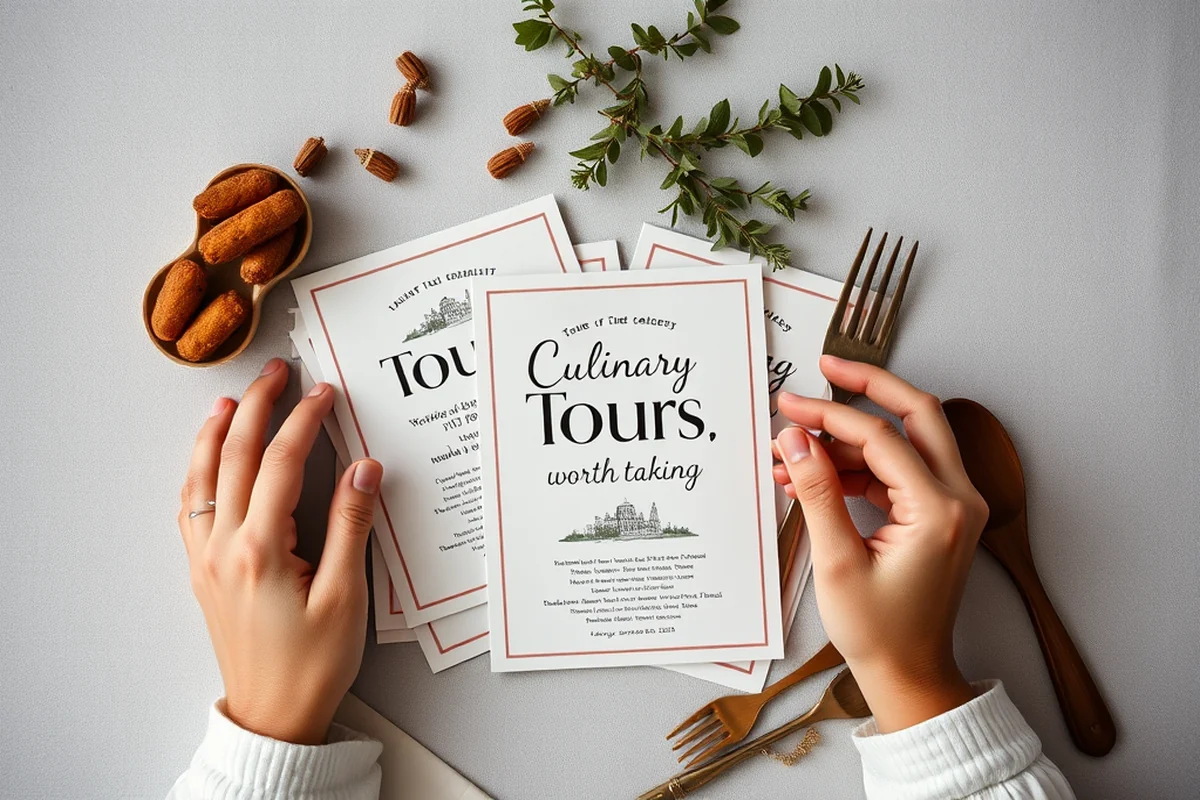
I’ve hosted several small-space events where a culinary tour was a key component. In one instance, we had a group of 12 in a cozy kitchen, and we invited a local baker to lead a hands-on cookie-making session. The space was small, but the experience was rich with interaction and creativity.[2]
The secret to making a culinary tour work in a small space is preparation. We prepped the area beforehand, set up all the necessary tools and ingredients, and made sure the flow of the experience was smooth. It’s a bit of work upfront, but the result is worth it.
I’ve found that small-space culinary tours are ideal for intimate events, family gatherings, or small corporate meetings. They create a more personal and immersive experience, and they’re often easier to manage than larger events.
Related: Food show worth it 2
Culinary Tours for Outdoor Events
I’ve organized a few outdoor events where we incorporated a culinary tour into the experience. One was at a vineyard, where guests joined a winemaking demonstration and then enjoyed a tasting. The setting was beautiful, and the experience was both educational and enjoyable.
For outdoor events, it’s important to choose a tour that complements the environment. For example, if you’re at the beach, a seafood preparation tour might be a good fit. If you’re in the mountains, a tour that focuses on local foraging or mountain cuisine could be a great addition.
I’ve found that outdoor culinary tours can be a great way to connect guests with nature and local traditions. They add a unique dimension to your event and can be a conversation starter for your guests.
The Grown-Up Version of a Culinary Tour
I’ve had the pleasure of hosting a number of grown-up culinary tours — events that are more refined, with a focus on sophistication and elegance. These tours often feature high-quality ingredients, expert chefs, and a more curated experience.[3]
For these events, I’ve partnered with chefs who have a strong background in fine dining or culinary arts. The result is a more elevated experience — one that feels more like a private dinner party than a casual event.
I’ve found that the grown-up version of a culinary tour is perfect for corporate events, weddings, or high-end social gatherings. It adds a level of sophistication that can’t be achieved with a traditional party.
The grown-up version of a culinary tour is where elegance meets education.
Culinary Tours That Are Easy to Plan
I’ve worked with a few tour companies that offer pre-packaged culinary experiences — these are tours that are already designed, planned, and ready to go. They’re a great option for hosts who are short on time or resources.
These tours often include everything from the location to the materials needed for the experience. All you have to do is coordinate the logistics and ensure the guests are ready to participate. It’s a great way to add a unique element to your event without the stress of planning.
I’ve found that these low-effort tours are especially useful for first-time hosts or those who are unfamiliar with the logistics of planning a culinary tour. They offer a reliable and stress-free solution that still delivers a memorable experience.
💰 Budget-Friendly Culinary Tour
An affordable way to bring a culinary experience to your event without breaking the bank.
🏡 Small-Space Culinary Tour
A hands-on experience that works well in compact spaces like apartments or private kitchens.
🌳 Outdoor Culinary Tour
An immersive experience that takes place in natural settings like vineyards, beaches, or forests.
🎩 Grown-Up Culinary Tour
A refined and sophisticated experience tailored for mature guests and high-end events.
✨ Low-Effort Culinary Tour
A pre-planned, stress-free experience that’s easy to coordinate and execute.
| The mistake | Why it happens | The fix |
|---|---|---|
| Not considering the size of the space for a culinary tour. | A small space can quickly become overwhelming if the number of guests is too large for the area. | Always check the size of the space and ensure it can comfortably accommodate the number of guests and the activities involved. |
| Choosing a tour that doesn’t align with the event’s theme. | A mismatched tour can feel disconnected from the overall event and may leave guests confused or uninterested. | Select a tour that aligns with the event’s theme or purpose to create a more cohesive and meaningful experience. |
Culinary Tours Worth Taking
Common Questions
How long should a culinary tour last for an event?
Can a culinary tour be customized for a specific group of guests?
What should I consider when choosing a culinary tour for my event?
What are the typical costs for a culinary tour?
References
- The Bay Area's best BARTable food tours (bartable.bart.gov)
- Is Culinary School Worth It? Pros, Cons, and Expert Advice (ciachef.edu)
- What's New(s) in St. Helena (cityofsthelena.gov)
- Frequently Asked Questions - Culinary Institute Lenotre (culinaryinstitute.edu)
Cite this guide
Corporate Event Catering (2026). Culinary Tours Worth Taking. https://banquetplan.com/culinary-tours-worth-taking/
Feel free to cite or share this guide.